
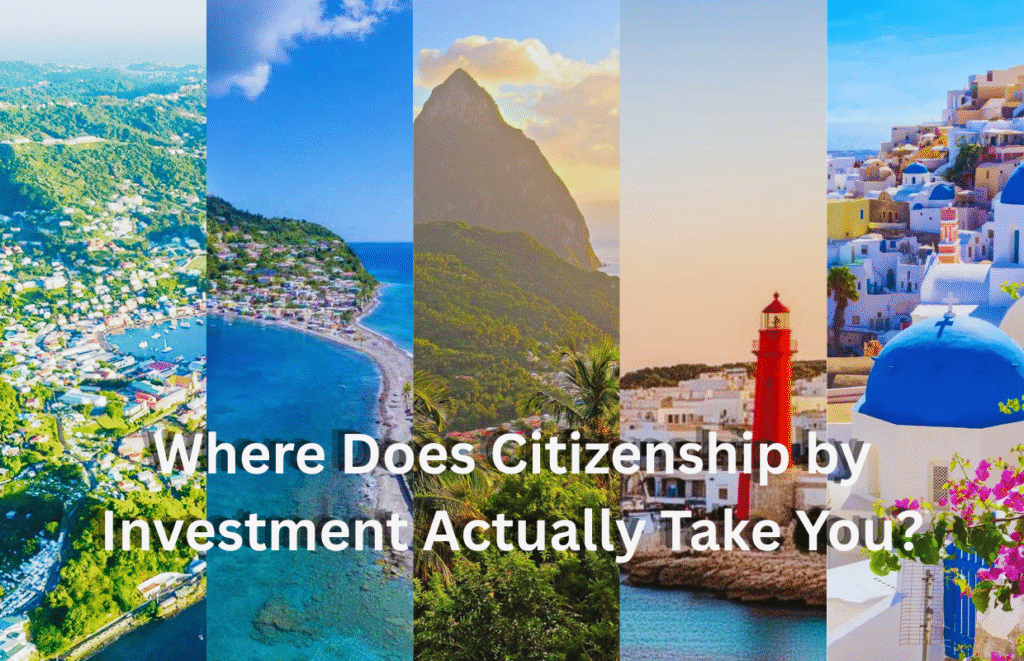
Caribbean sunsets, Pacific lagoons, and a Greek villa with your name on the deed which one actually gets you a new passport, and which one just gets you a nice vacation home?
There’s a certain kind of 2 a.m. thought that a lot of successful people have started having more often: what happens if I need to leave fast and my passport won’t let me? Currency controls, sudden visa bans, a political mood swing, a pandemic that closes borders overnight. You don’t need to be a conspiracy theorist to want a backup plan. You just need to have been paying attention for the last few years.
That’s the quiet engine behind the citizenship-by-investment (CBI) industry: not tax evasion, not a Bond-villain fantasy, but risk management for people whose lives, families, and businesses cross borders. And in 2026, the map of where you can actually buy that insurance policy has changed again. Some doors have gotten more expensive. Some have gotten stricter. A couple of new ones have opened in places you wouldn’t expect. And at least one popular “citizenship” option isn’t citizenship at all.
This guide walks through the full landscape, then goes deep on the six programs we work with directly: Saint Lucia, Grenada, Dominica, Antigua and Barbuda, Vanuatu, and Greece.
The Bigger Picture: What’s Actually Happening in 2026
A decade ago, “citizenship by investment” basically meant five small Caribbean nations and a couple of Mediterranean outliers. That’s no longer true. As of 2026, roughly 13 countries offer some formal route to citizenship or residence through investment, and the map now stretches from the Caribbean into Africa, Asia, and the Pacific.
A few things are worth knowing before you pick a program:
- The Caribbean has quietly unionized. In 2024, the five Eastern Caribbean CBI nations signed an agreement setting a shared minimum investment floor no more racing each other to the bottom on price. A new regional body is also being set up to standardize due diligence and share information across borders, which is good for program integrity but means the “cheap and easy” era of Caribbean citizenship is ending.
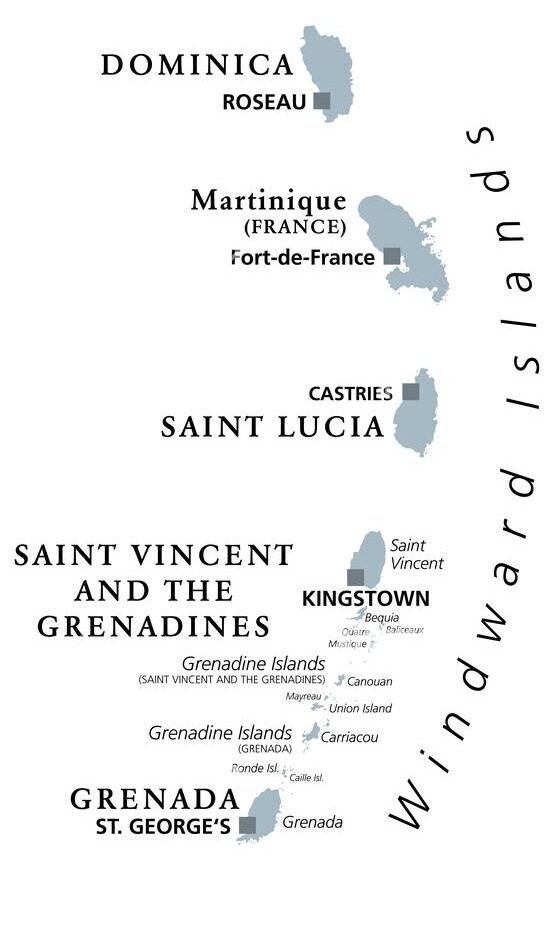
- New entrants are showing up fast. São Tomé and Príncipe launched a program in 2025. Nauru has one running in the Pacific. Botswana, Argentina, and St Vincent and the Grenadines are all expected to start issuing investor passports in 2026. Not all of these have the track record or the visa-free access of the established players.
- Scrutiny is way up. The IMF and European institutions have both publicly raised concerns about the Caribbean CBI sector, and due diligence checks background checks, source-of-funds verification, sanctions screening have gotten noticeably tighter across the board. A “same-day approval” pitch from an unlicensed agent is a red flag, not a selling point.
- St Kitts and Nevis still tops most independent rankings for reputation and program maturity, with Dominica and Grenada close behind worth knowing even though it’s not one of the programs covered in depth here.
- Turkey and Malta represent the higher-cost, higher-scrutiny end of the market Turkey’s program has reportedly been rejecting or holding a large share of applications recently as due diligence has tightened, and Malta’s process runs well over a year.
In short: the sector is maturing. That’s a good thing for serious applicants, and a bad thing for anyone hoping to find a shortcut.
None of this means the industry is shrinking quite the opposite. Demand is climbing as more high-net-worth families treat a second passport the way they’d treat any other diversification strategy: not because they plan to use it tomorrow, but because they’d rather have it and not need it than need it and not have it. What’s changed is who gets approved, how long it takes, and how much homework a good agent needs to do before a client ever wires a dollar.
Two Different Products Wearing the Same Marketing Language
Before going island by island, one clarification that most blogs skip: “citizenship by investment” and “residency by investment” (often branded as a “Golden Visa”) are not the same product, even though they get marketed side by side constantly.
- Citizenship by investment (the Caribbean programs, Vanuatu) hands you a passport directly often in a matter of months with no requirement to ever set foot in the country.
- Residency by investment (Greece’s Golden Visa) gives you the legal right to live in a country. It’s a visa, not a passport. Citizenship, if it comes at all, arrives later through the country’s normal naturalization process which usually does require years of actual residence.
Both are legitimate. Both are useful. But they solve different problems, and conflating them is how people end up disappointed. Keep that distinction in mind as you read the next two sections. One thing every program below has in common, regardless of category: none of them are “buy now, get a passport tomorrow” transactions. Every applicant goes through layered background screening agent-level pre-checks, a government citizenship unit’s own review, and, in the Caribbean especially, an independent international due diligence firm digging into everything from criminal records and sanctions lists to source-of-funds documentation and even an applicant’s business associates. A clean record doesn’t automatically mean a fast yes, and a rejection from one Caribbean program is often visible to the others. That’s precisely why working with a licensed, government-authorized agent rather than chasing a discounted “guaranteed approval” offer matters more in 2026 than it ever has.
Saint Lucia
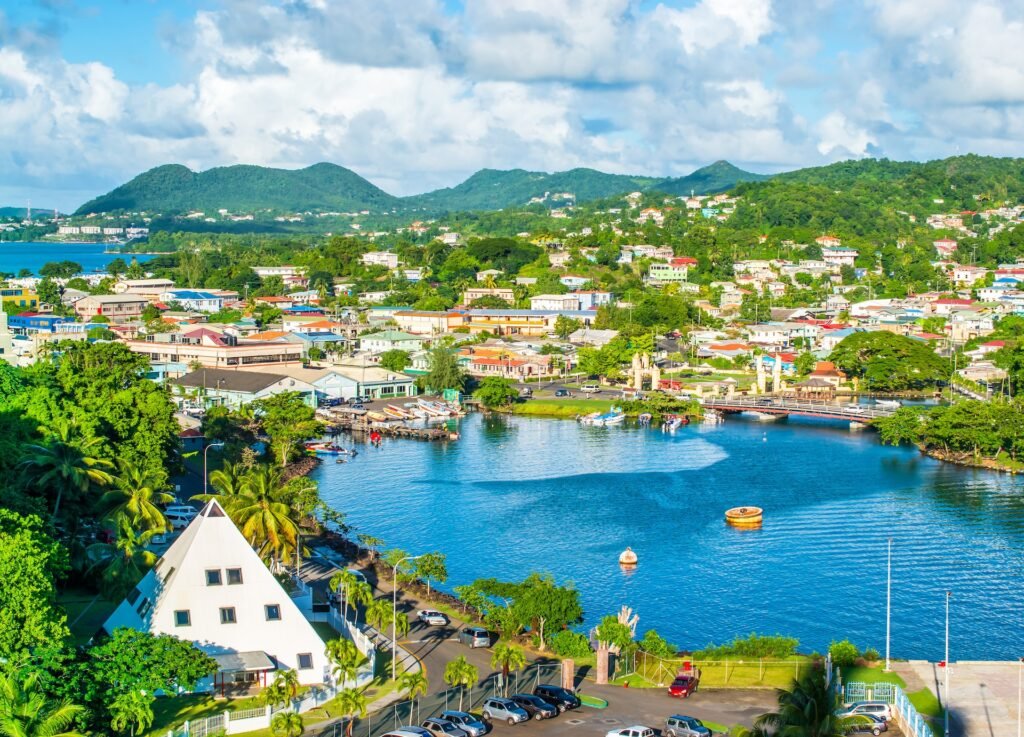
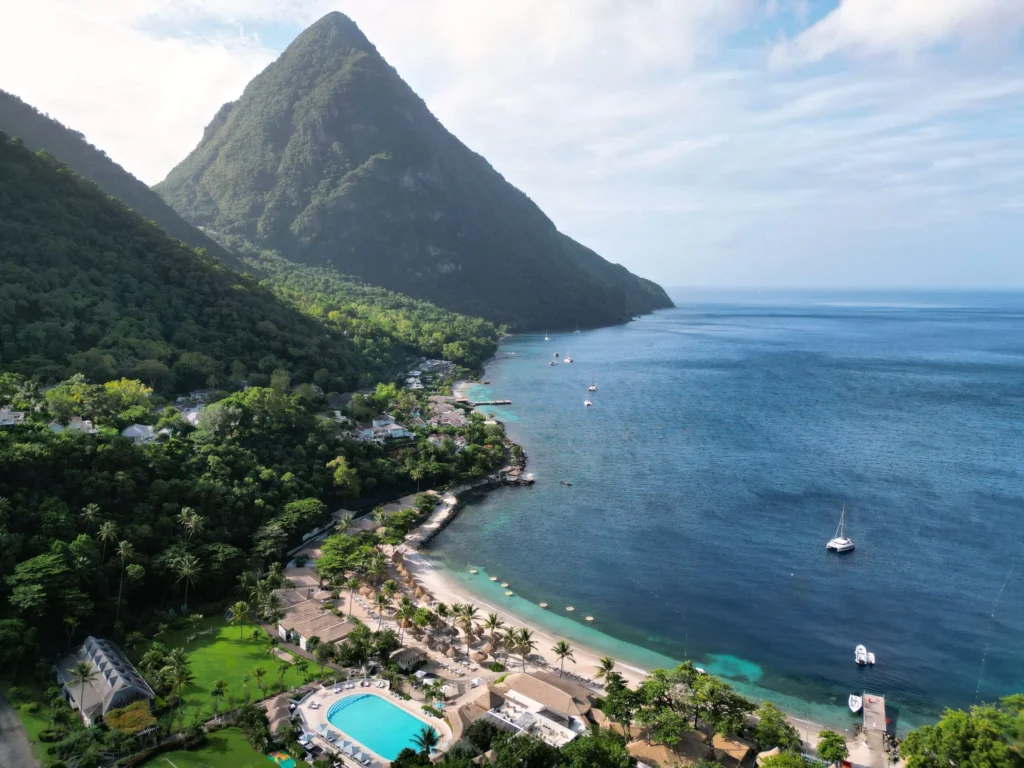
Saint Lucia’s program, running since 2015, is built around flexibility. The entry point is a $240,000 non-refundable contribution to the National Economic Fund, covering a single applicant or a family of up to four. If you’d rather not simply donate the money, there’s a $300,000 real estate route into an approved hotel, resort, or villa project, and a genuinely distinctive option in the Caribbean a $300,000 government bond that’s held for five years and then returned to you. That refundable-bond option is one of the reasons agents point families toward Saint Lucia specifically: it turns the program from a pure cost into something closer to a long-term, no-interest deposit.
The process is fully remote no visit required, before or after approval and a Saint Lucia passport currently opens visa-free or visa-on-arrival access to around 145 countries, including the Schengen Area, Singapore, and Hong Kong (though notably not the UK or South Africa, where some competing islands have an edge). Worth flagging honestly: processing has slowed somewhat in 2026 due to application backlogs, so while the program is quoted at four to six months, real timelines are currently running a bit longer for some applicants.
Family inclusion is generous spouses, children up to age 30, and parents over 55 can typically be added to a single application and Saint Lucia allows dual citizenship outright, so there’s no need to renounce an existing nationality. For clients who like the idea of a Caribbean passport but want at least part of their capital back on a fixed timeline, the bond route is usually the deciding factor.
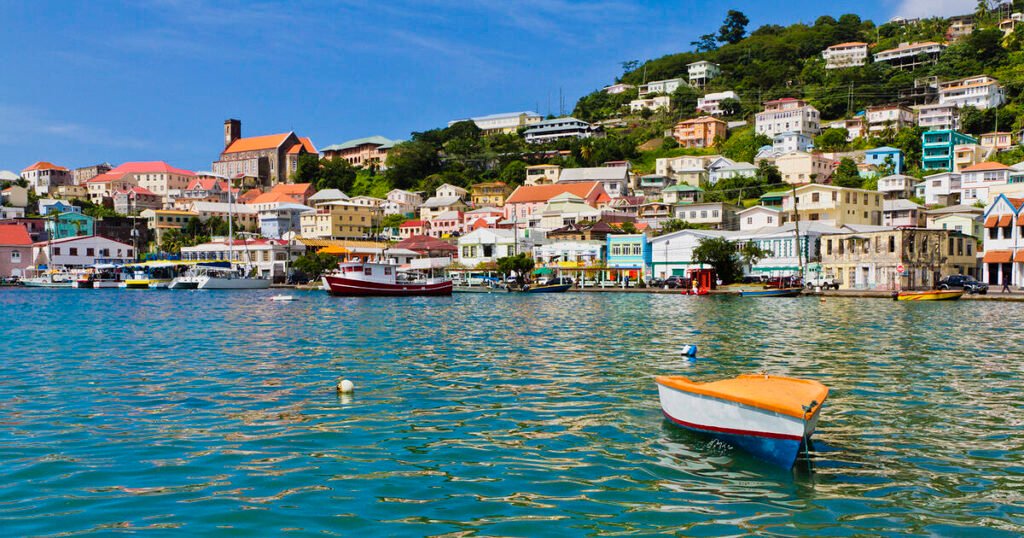
Grenada
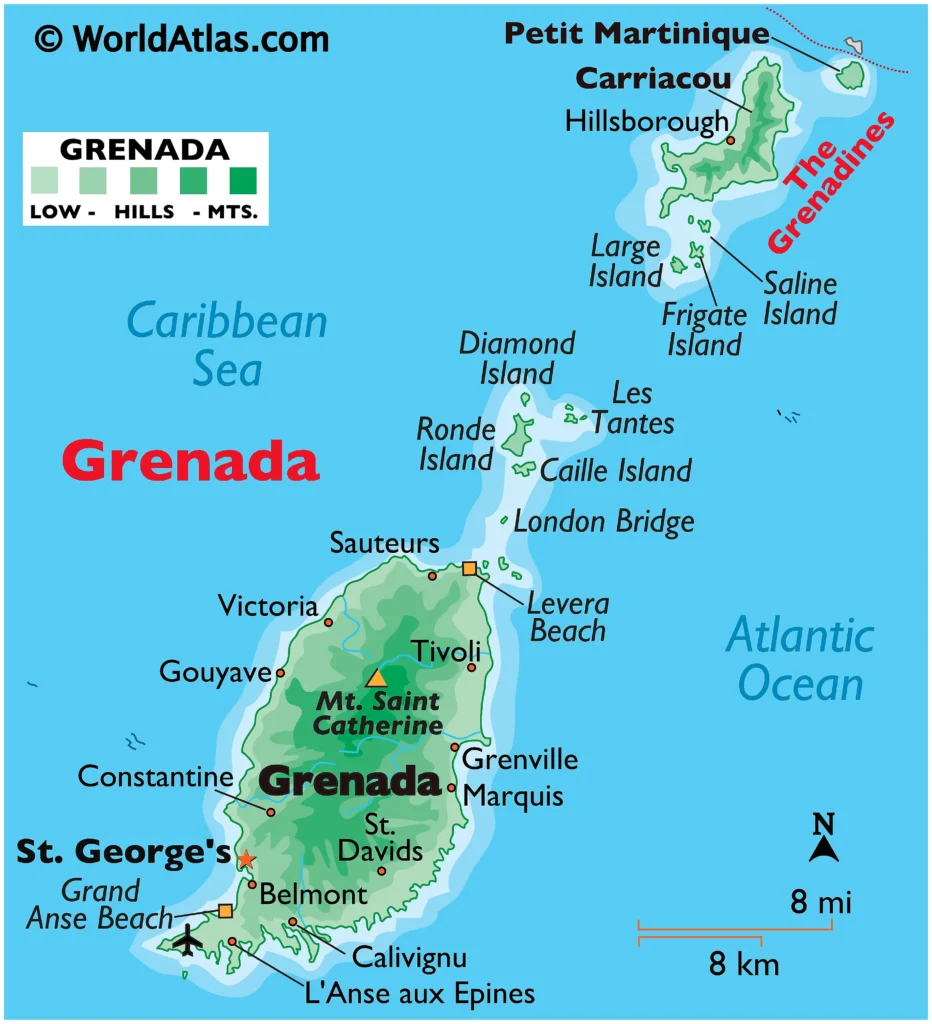
Grenada’s program starts at $235,000 into the National Transformation Fund, or $270,000 for a shared real estate investment (rising to $350,000 for full ownership). What makes Grenada stand out isn’t the price; it’s the same as most of its neighbors it’s a single treaty most people have never heard of.
Grenada is the only Caribbean CBI country with an E-2 Investor Visa treaty with the United States. That means a Grenadian citizen can apply for an E-2 visa to live and run a business in the US by investing in an American enterprise a route that’s otherwise closed to citizens of countries without such a treaty. There’s a catch worth knowing upfront: as of a 2026 rule change, new Grenadian citizens now need to have been genuinely resident in Grenada for three years before they can use this pathway, so it’s a strategic, patient play rather than an instant back door.
Beyond that, Grenada offers no tax on worldwide income, capital gains, inheritance, or wealth, visa-free or visa-on-arrival access to roughly 140 – 147 destinations including the Schengen Area, the UK, and China, and no requirement to ever visit. Processing typically runs four to eight months depending on the source and the season, and every applicant aged 17 or older now goes through a mandatory online due diligence interview as part of the review.
For a client who already has, or plans to build, a US-facing business, Grenada is frequently the single most strategically interesting program in this entire list not because of the passport’s travel network, which is solid but unremarkable next to its neighbors, but because of that one treaty almost nobody else in the Caribbean can offer.
Dominica
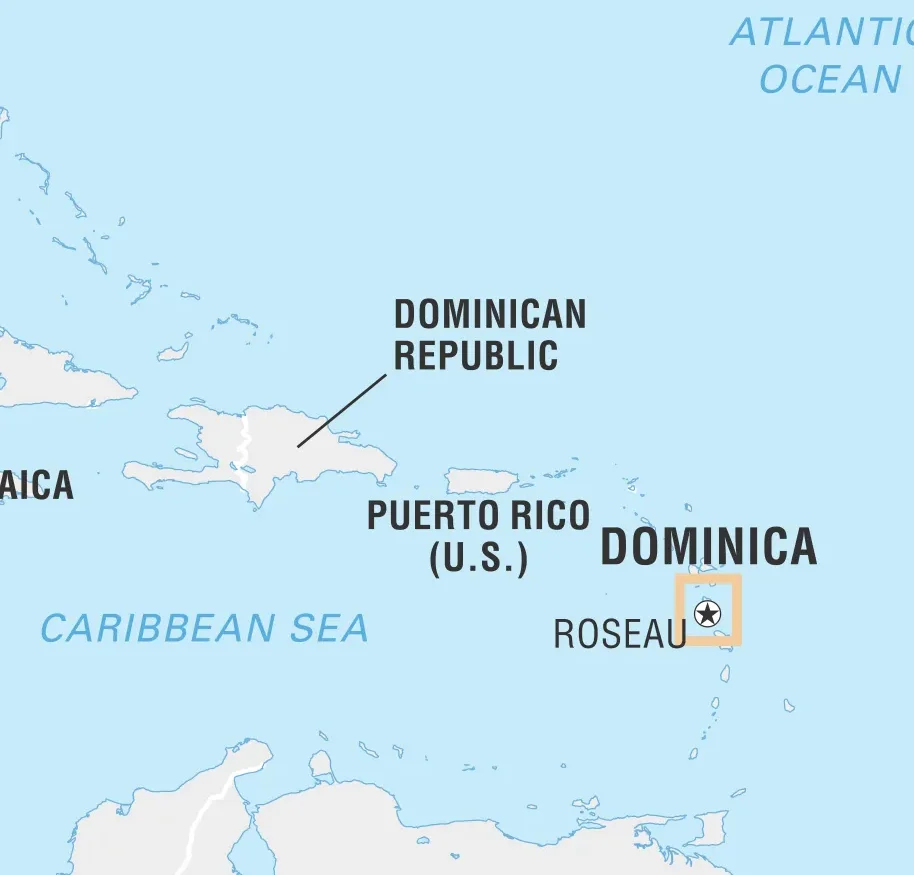
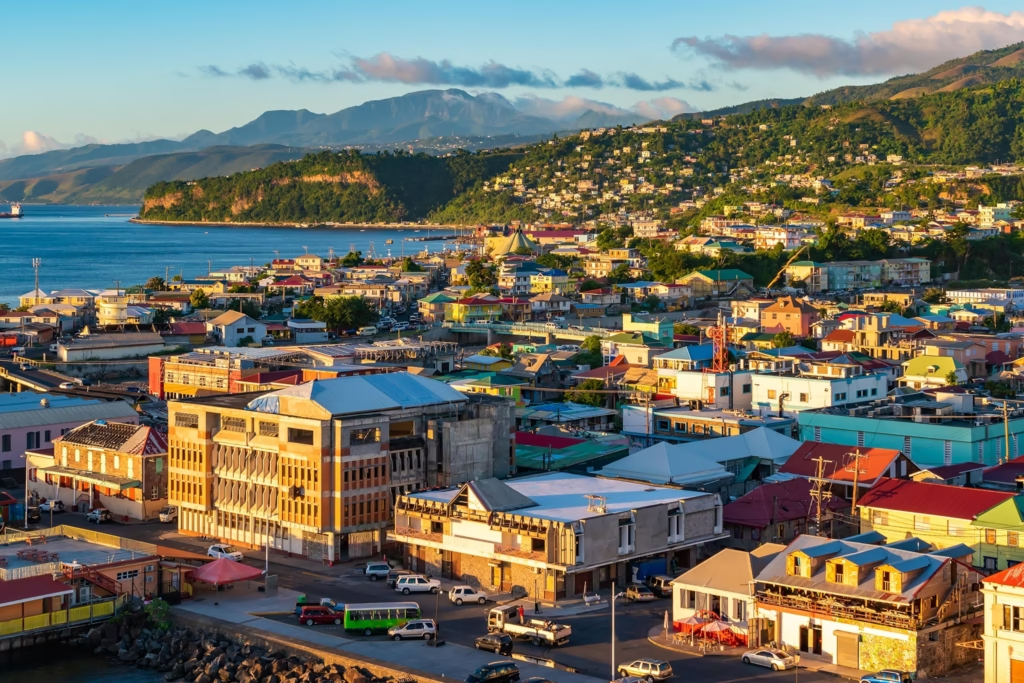
Dominica has been doing this longer than anyone else in the region the program has run continuously since 1993 and it remains the most affordable route in the Caribbean, starting at $200,000 through either a donation to the Economic Diversification Fund or an equivalent real estate investment. A single applicant’s total cost, including government fees, comes in around $210,000; a family application closer to $270,000.
Dominica’s passport currently grants visa-free or visa-on-arrival access to 145+ countries, and the process has traditionally been entirely remote. One thing worth flagging for anyone considering Dominica specifically: there’s discussion of a future rule requiring successful applicants to collect and renew their passports physically on the island a real shift from the current fully remote model, though no implementation date has been confirmed yet. It’s the kind of detail a good agent should be tracking for you, not something you find out about after you’ve already invested.
Dominica’s track record is arguably its biggest asset: more than three decades of continuous operation, a well-documented legal framework, and a comparatively low historical rejection rate. For clients whose main priority is proven reliability at the lowest possible entry cost, it’s usually the first program we bring up.
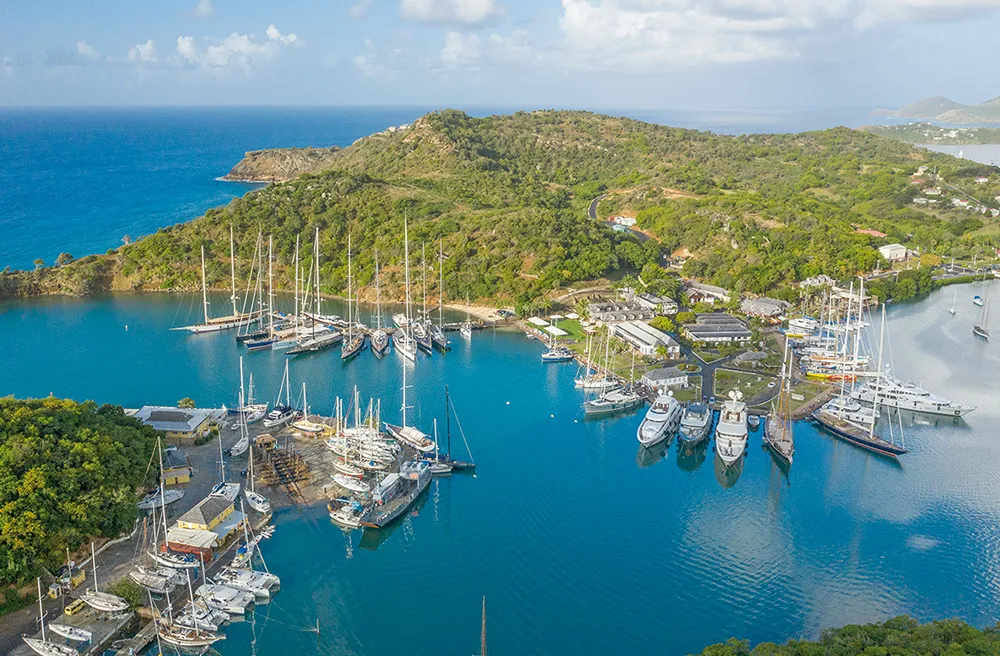
Antigua and Barbuda
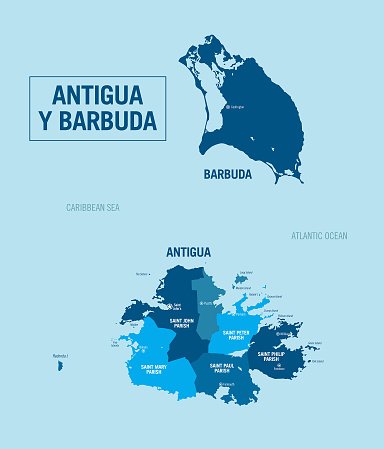
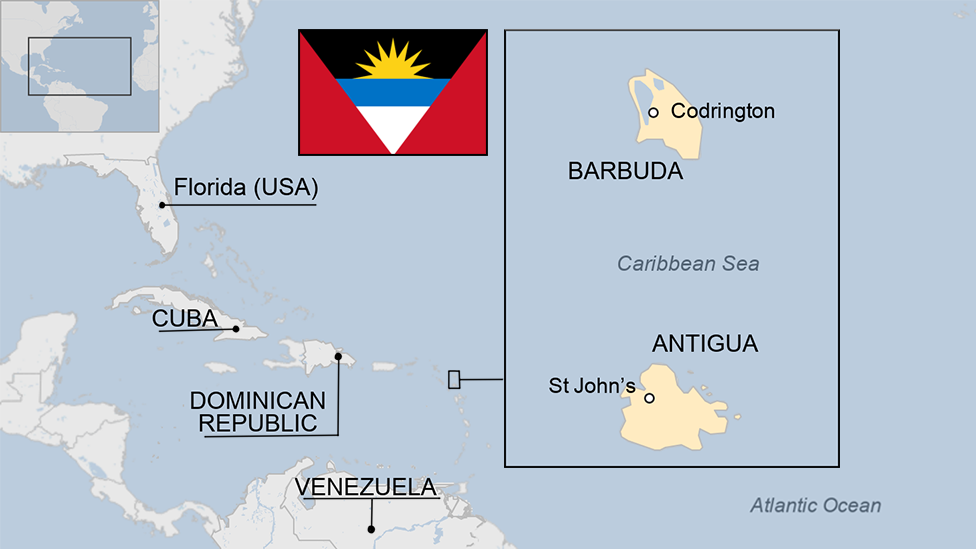
Antigua and Barbuda’s entry point is $230,000 into the National Development Fund for a family of up to four, with a $300,000 real estate option and it’s one of only two Caribbean nations that allow full sole ownership of the qualifying property (most competing programs only offer shared/fractional ownership). Large families get a specific break here too: a $260,000 donation to the University of the West Indies covers a family of six or more, which often makes Antigua the most cost-effective option once you’re past four dependents.
The passport currently opens visa-free or visa-on-arrival access to roughly 150 countries including South Africa, which several competing Caribbean passports don’t currently offer. The one meaningful trade-off: Antigua and Barbuda requires new citizens to spend a minimum of five days in the country at some point within the first five years the only program in this Caribbean group with any physical presence requirement at all. Processing typically takes around six months.
That small physical-presence requirement is easy to overstate five days across five years is closer to “take a nice vacation once” than a residency obligation but it’s worth setting expectations correctly with clients up front, since every other program on this list requires zero visits, ever.
The Pacific Option: Vanuatu
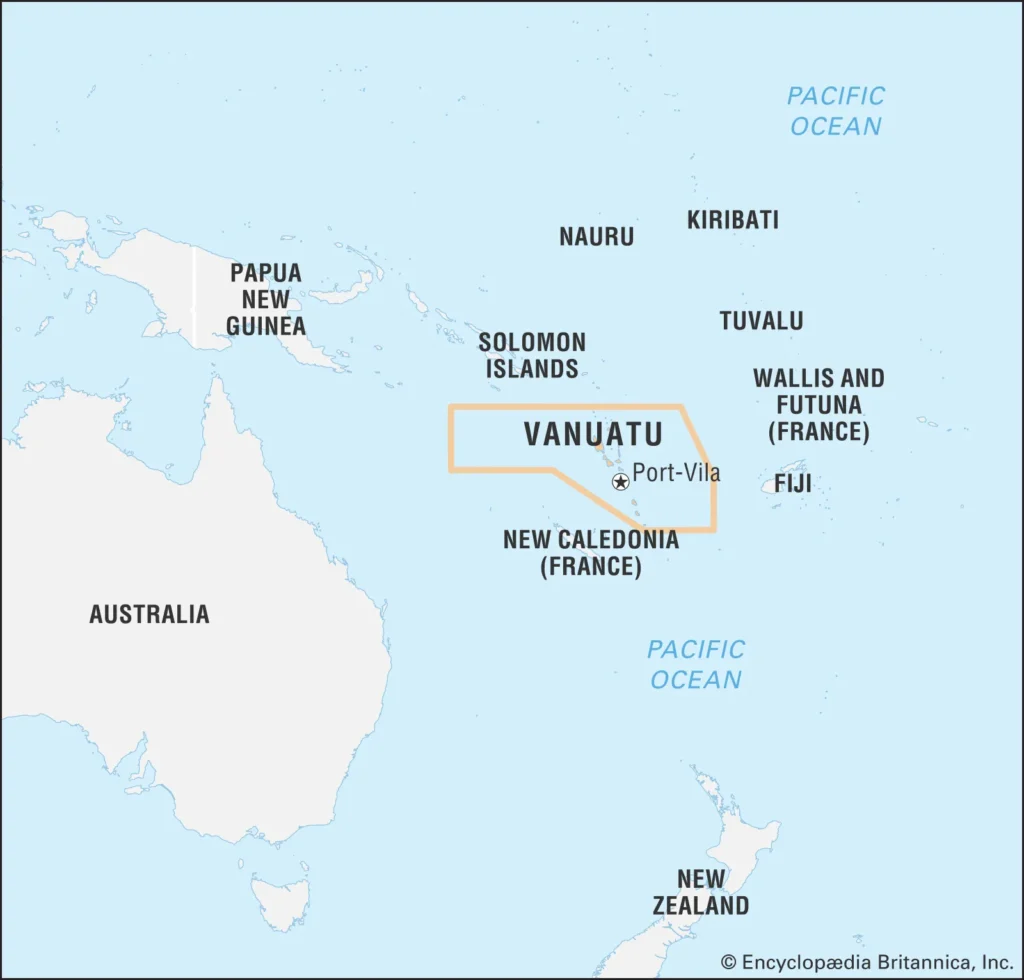
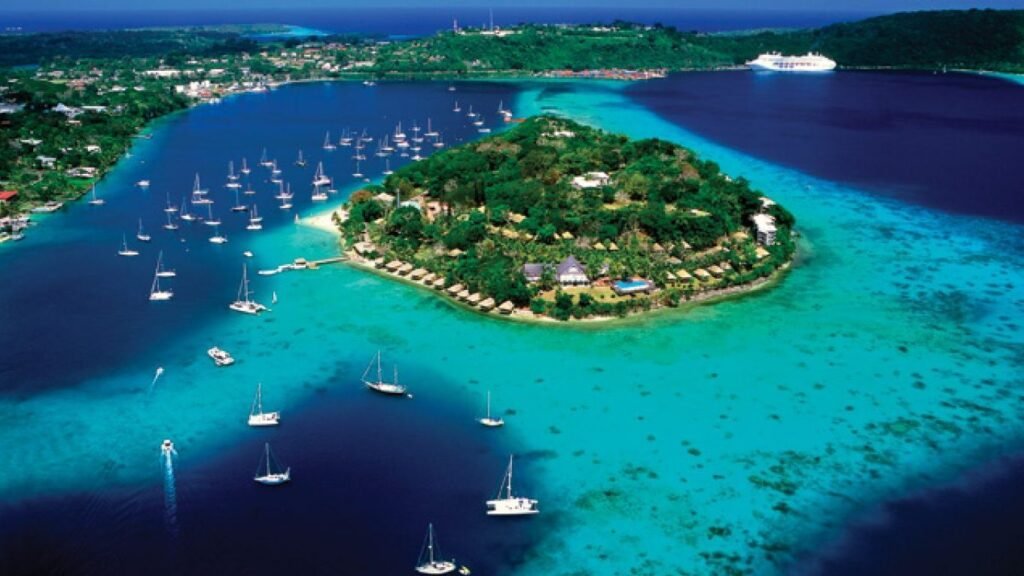
Worth saying plainly: Vanuatu isn’t in the Caribbean. It’s a Pacific island nation, thousands of miles from the West Indies, but it gets marketed alongside Caribbean CBI programs constantly because the product is structurally similar fast, remote, donation-based citizenship and it currently holds the title of fastest citizenship program on Earth.
The core route, the Development Support Program, starts at $130,000 for a single applicant, $150,000 for a couple, with roughly $10,000–$15,000 added per additional dependent. There’s no meaningful real estate alternative this is a straightforward, one-time contribution model and no minimum stay, language test, or history exam. Processing is typically completed in one to three months, with some cases closing in as little as 30 days.
The trade-off is visa-free access: a Vanuatu passport currently opens somewhere in the range of 90 – 118 destinations, noticeably fewer than the Caribbean passports above, and it doesn’t include the UK. For clients whose priority is speed and cost above all else a fast, tax-free Plan B rather than maximum globe-trotting flexibility Vanuatu is hard to beat. For clients who want the widest possible visa-free network, it’s usually positioned as a second passport alongside a Caribbean one, not a replacement for it.
Europe: Greece’s Golden Visa
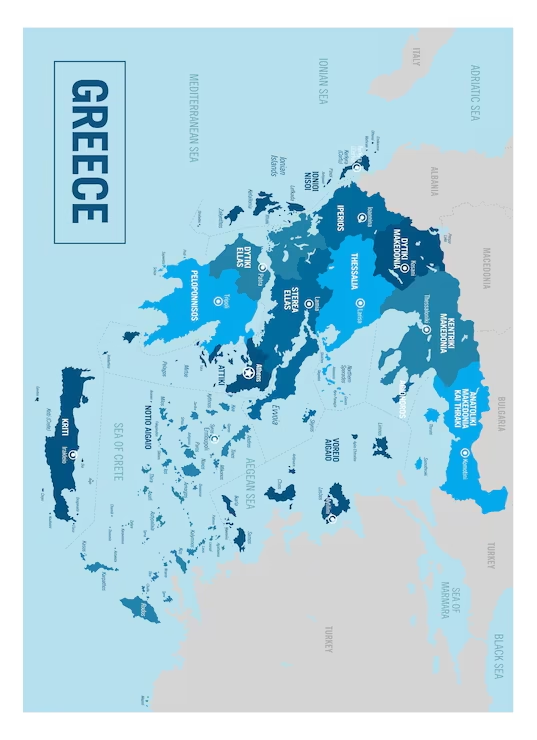
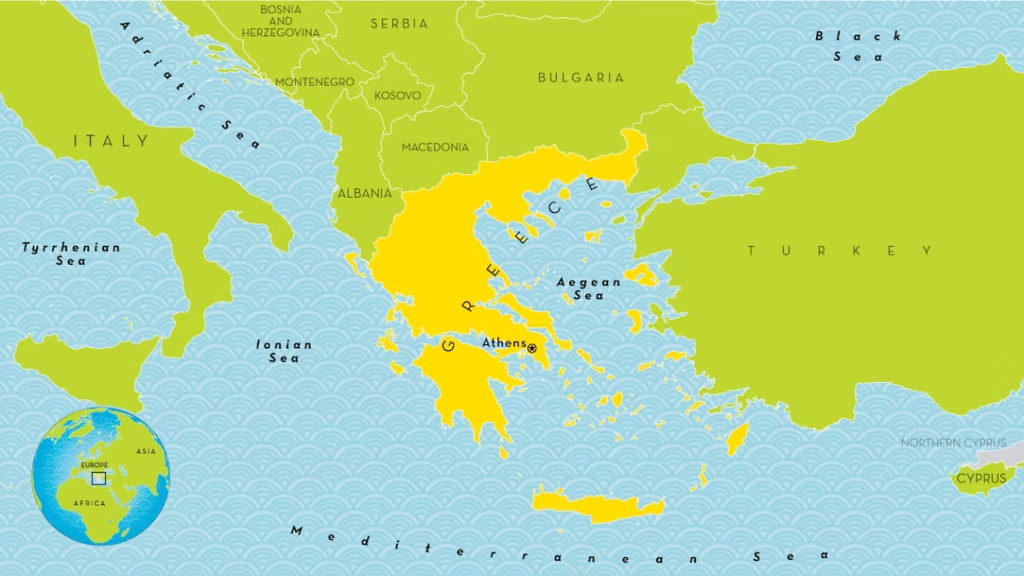
Here’s where the “citizenship” framing needs a hard correction, because it’s the single most common point of confusion clients bring to us. Greece does not sell citizenship. It sells residency a renewable five-year permit, through its long-running Golden Visa program and that residency can, much later, become a pathway toward Greek and EU citizenship through the country’s normal naturalization process, which has its own separate residency-duration requirements entirely apart from the investment itself.
As of 2026, Greece’s thresholds are tiered by location:
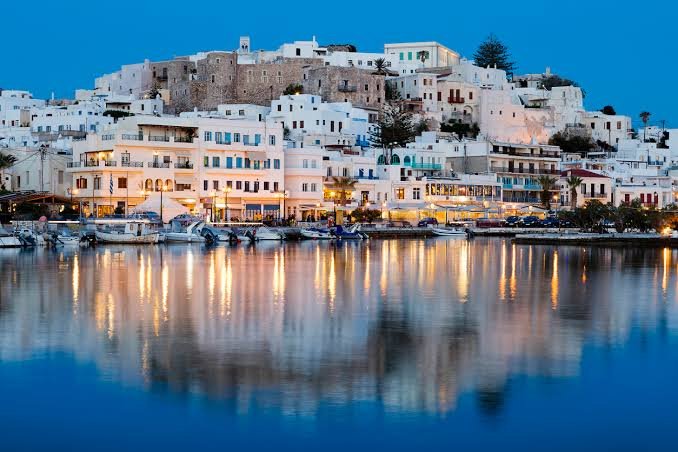
- €800,000 for property in Athens, Thessaloniki, Mykonos, Santorini, and any Greek island with a population over 3,100
- €400,000 for property in most other regions of the country
- €250,000 in narrower cases certain fund investments or renovated/heritage building conversions
There’s no minimum stay requirement to keep the visa active, family members are included in a single application, and the permit grants visa-free travel across the 29-country Schengen Area. Compared to citizenship-by-investment, Greece is slower to any eventual passport and requires meaningfully more capital but it offers something none of the island programs can: an actual, livable foothold inside the European Union, with real estate that can appreciate, generate rental income, and function as a genuine second home rather than a purely transactional donation
The Six Programs, Side by Side
| Program | Entry Point | Typical Timeline | Visit Required? | Standout Feature |
| Saint Lucia | $240,000 | 4–6+ months | No | Refundable government-bond option |
| Grenada | $235,000 | 4–8 months | No | US E-2 Investor Visa treaty |
| Dominica | $200,000 | 4–6 months | No | Longest track record (since 1993), lowest cost |
| Antigua & Barbuda | $230,000 | 6 months | 5 days within 5 years | Full sole real-estate ownership; families of 6+ discount |
| Vanuatu | $130,000 | 1–3 months | No | Fastest citizenship program in the world |
| Greece (Golden Visa) | €250,000 – €800,000 by location | Weeks to months for the visa | No | Actual EU residency, not just a passport |
Figures reflect published 2026 program terms and exclude government, legal, and due diligence fees, which typically add several thousand to tens of thousands of dollars depending on family size and program.
So Which One Actually Fits?
There’s no universally “best” program, only the one that matches what a client is actually trying to solve for:
- Fastest, cheapest, tax-free Plan B: Vanuatu
- Widest visa-free travel for the money: Saint Lucia or Antigua and Barbuda
- A genuine route into US business and residency: Grenada, specifically for its E-2 treaty
- Lowest entry cost in the Caribbean: Dominica
- Large families (6+ dependents): Antigua and Barbuda’s university-fund route
- An actual home base inside the EU, with citizenship as a long-term possibility rather than an instant grant: Greece
The honest version of this industry, in 2026, isn’t about finding the cheapest passport on the internet; coordinated pricing floors and tightened due diligence have mostly closed that door anyway. It’s about matching the right legal product to the right goal, working only through licensed, government-authorized channels, and going in with realistic expectations about timelines, visit requirements, and what “citizenship” versus “residency” actually means for your family’s plans.
It’s also worth remembering that these programs aren’t mutually exclusive. Some of the most well-structured plans we see combine two of them entirely on purpose a fast Caribbean or Vanuatu passport for immediate mobility and peace of mind, paired with a slower-moving Greek Golden Visa for an actual foothold inside the EU. Neither one replaces the other; they’re solving different problems on different timelines, and used together they cover far more ground than either would alone.
None of these six programs is a bad choice on its own terms. They’re built for different people, different timelines, and different definitions of “security.” The islands sell speed and simplicity. Greece sells a long game with a real address at the end of it. What matters is being honest with a client about which problem they’re actually trying to solve and then walking them through the real terms, not the marketing copy.
Considering one of these routes? The details above reflect 2026 program terms, which as with any government policy are subject to change. Talk to a licensed agent before making any investment decision, and treat any offer priced below official government minimums as a serious warning sign, not a bargain.
Latest News
- Saint Lucia Second Passport: Why Global Investors Choose Saint Lucia for Security, Freedom & Future Opportunities
 In today’s global economy, having only one passport can sometimes limit personal, business, and lifestyle opportunities. Entrepreneurs, investors, and families around the world are increasingly exploring second citizenship solutions to… Read more: Saint Lucia Second Passport: Why Global Investors Choose Saint Lucia for Security, Freedom & Future Opportunities
 - The Island Passport Playbook
 Caribbean sunsets, Pacific lagoons, and a Greek villa with your name on the deed which one actually gets you a new passport, and which one just gets you a nice… Read more: The Island Passport Playbook
 - Why Government Donation Is the Most Popular Citizenship by Investment Option
 Citizenship by Investment (CBI) has become an increasingly popular solution for individuals and families seeking greater global mobility, financial diversification, and long-term security. Among the available investment routes, the government… Read more: Why Government Donation Is the Most Popular Citizenship by Investment Option
 - Why Working with an Authorized Citizenship by Investment Agent Is Essential for Caribbean Citizenship Programs?
 Introduction Caribbean Citizenship through approved Citizenship by Investment programs has become an increasingly popular option for investors and families seeking greater international mobility, business opportunities, and a Second Citizenship. Countries… Read more: Why Working with an Authorized Citizenship by Investment Agent Is Essential for Caribbean Citizenship Programs?
 - Top 5 Reasons Saint Lucia Is Becoming a Coveted Global Destination
 Back to all insights Saint Lucia global destination interest has grown rapidly in recent years as more travellers, investors, and global citizens look for places that offer both lifestyle… Read more: Top 5 Reasons Saint Lucia Is Becoming a Coveted Global Destination
 - Best Citizenship by Investment Programs in 2026
 Why Saint Lucia, Antigua & Barbuda, and Vanuatu Still Matter in 2026 In 2026, obtaining a second citizenship is no longer viewed solely as a lifestyle upgrade. For many investors,… Read more: Best Citizenship by Investment Programs in 2026
I’ve tried a few platforms, but the interface here is so smooth. Really enjoying my time on jili00game, definitely my new favorite spot!
This platform really knows how to treat its players. The VIP feel is real and the gameplay is top notch. I’m spending a lot of my free time on 345vipjogar lately.
I was skeptical at first but this site really delivers. The game variety is amazing and I had no issues with my first withdrawal. Love krawin68 so far!
The APK is lightweight and doesn’t drain my battery. Perfect for playing on the go during my break. Get your copy of yono247apk today!
I’ve been trying a few different spots lately and this one really stands out. The interface is smooth and the payouts are quick. Definitely check out 98zcom if you want a reliable experience.
Had a great run tonight! The bonuses are legit and it is so easy to get started. If you are looking for some action, this is the place. lucky22login
Very professional setup and the withdrawal process is incredibly fast. No more waiting for days to get my winnings. idjitu100 is the real deal.
Платформы для взрослых способны служить средством интимного просвещения, а также поддержкой в осознании собственных желаний.
Они помогают пользователям изучать собственные желания в безопасной среде, уменьшая опасность фактических осложнений.
ero-storitop.com
Для партнёров общее обсуждение таких сюжетов способно укреплять доверие и служить причиной для открытого диалога о желаниях и границах.
Также эти платформы обеспечивают возможность для безопасной разрядки напряжения и уменьшения психологического напряжения, не причиняя вреда другим.
Сайты для взрослых способны служить способом интимного ликбеза, а также поддержкой в понимании личных предпочтений.
Подобные сервисы позволяют взрослым изучать свои желания в контролируемой форме, снижая опасность фактических осложнений.
порно рассказы на работе
В отношениях совместное изучение таких сюжетов способно укреплять взаимопонимание и становиться стимулом для откровенного диалога о предпочтениях и рамках.
Помимо этого такие ресурсы дают возможность для безрисковой реализации потребностей и снятия стресса, не причиняя вреда другим.
The registration process was super quick and the welcome bonus is actually legit. I am really enjoying the experience here so far on phgl777